

This Week on The Run Rate - Issue #12
Weekly Roundup · Sep 20–26, 2026
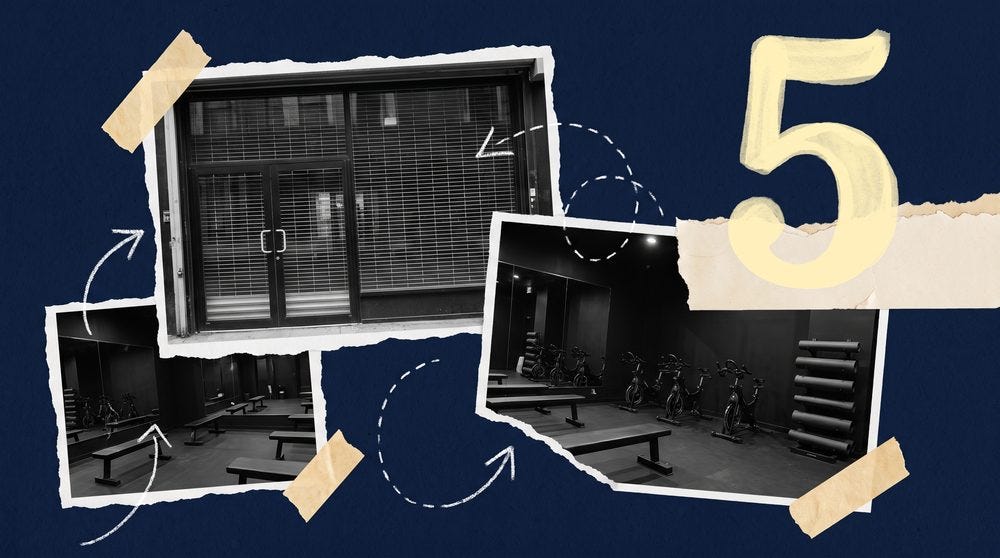
Barrecore and Boom Cycle Shut With No Warning. The Same Studios Failed Three Years Ago.
Five well known London studio brands closed on the same day. Barrecore, Boom Cycle, Kobox, Reformcore and Triyoga. Members found out by email. So did the instructors, who had been chasing late pay for weeks.
Here is the part nobody else is reporting. When a company goes under properly, an administrator gets appointed and there is someone to send your claim to. That has not happened here. Companies House still lists the company as active, with no insolvency process at all. So a member who paid £2,400 up front has nowhere to go.
These same studios have failed once before. The previous owner is still in liquidation, and the company that bought them has been through five directors in fifteen months.
If you sell packages or memberships up front, expect a member to ask you this week what happens to their money if you ever close. Have a real answer ready before they ask.
Members Quit in the First Month. Selling a Course Instead of a Class Pack Might Fix It.
Researchers followed 389,481 people using a training app to see who kept going. Only about one in ten beginners was still training a year later. Half had stopped by week 19.
What predicted who stayed was how consistently they trained in their first 28 days.
So here is the question for your studio. A class pack leaves it to the member to book, and week three is where they quietly drift. A course has set dates, so someone is expected in the room on Tuesday. We go through how to sell the second thing instead of the first, and why those first four weeks deserve most of your attention.
Oura’s $2.2 Billion IPO Is Mostly a Payout to Early Investors.
Oura, the smart ring company, set its terms for going public. When a company floats, you would expect it to sell new shares and keep the money to grow the business. Most of the shares on sale here already belong to existing investors, and that money goes to them.
By Oura’s own filing, once the tax bill on employee stock is covered, about $6.2 million of the raise is actually left for the company.
Why this matters to you. Wearables are the thing your members quote at you. The companies making them are under real pressure to turn a profit, so expect prices, subscriptions and partnership terms to move this year. If you are weighing up a wearable tie-in, read the terms closely and keep it easy to exit.
Gym Members Over 65 Grew Fastest Last Year. Here’s How to Reach Them.
US gym membership hit an all time high in 2025. The group growing fastest was people over 65, up 8.6% in a year.
Hardly anyone markets to them. Most studio websites are full of photos of people in their twenties, and that tells an older reader the place is probably not for them.
Three easy changes. Put a couple of older members in your photos. Say plainly what a beginner class involves. Run something in a daytime slot. We go through what this group wants and where they are already looking for it.
Mindbody Will Now Compare Your Studio to Others. Here’s What to Ask First.
Playlist, the company behind Mindbody, launched a tool that compares your studio’s numbers with other venues. It is built on anonymized data from more than 110,000 of them, so if you use Mindbody your numbers are already in that pool.
Benchmarks are useful. The catch is that the announcement never says what “similar” means. A 400 member gym and a six reformer Pilates studio are different businesses. If you are being compared with the wrong type of studio, the insight will not be much use to you.
Before you act on any benchmark, ask what it is comparing you with: how many studios, what size, what format, and which city. We go through the questions worth asking first.
How to Grow Revenue Without Adding More Members
Life Time added 1.2% more members last quarter and grew revenue 13.7%. Almost all of that extra money came from the members it already had.
We lay out what revenue per member actually is, what good looks like for a studio your size, and the two moves that raise yours.
If you want the version with the operator moves behind it, that started as The Take on double-digit revenue growth.
Apple Cut Fitness+ Staff. The Problem Is One Every Gym Knows: Churn.
Apple cut part of the team behind Fitness+, its workout video subscription. Reports point at two things. The content costs a lot to make, and subscribers do not stay.
That is worth sitting with, because Apple has the budget, the distribution and the production values, and video alone still could not hold people.
Here is the encouraging part. The thing Apple cannot do is the thing you already do. Someone notices when a member misses a week. Someone knows their name and their bad knee. If you have been worried that an app will replace you, this is good evidence that the video library was never the thing keeping people. Put your effort into the coaching and the check in, and treat your on demand content as a bonus rather than the product.
A Crunch Franchisee Tested Hot Yoga Inside Its Gyms. Now It’s Signing for 25 Studios.
CR Fitness runs more Crunch gyms than any other franchisee. Before committing to hot yoga, it put heated classes inside its own clubs to see whether members would actually turn up. They did, so it has now signed to open 25 Yoga Joint studios.
If you run a boutique studio, this is how your next competitor tends to arrive. It is a big gym that tested your format on its own members first. By the time it opens near you, it already knows the demand is there.
Your advantage is the room and the teacher. Ask a few regulars what keeps them coming to you specifically, then make more of that answer while you have the time.
Run Clubs Grew 3.5x Last Year. Now They Have Their Own App.
Run clubs on Strava grew three and a half times in 2025, and last week an app built just for them launched.
Most run clubs are free, so there is no competing with them on price. The good news is that you do not have to. Host one instead. A free run club that starts and finishes at your studio is the cheapest way we know to get local people through your door and let them see the place.
If you want to try it, pick one evening, keep it genuinely free, and put someone warm in charge of it. We go through how these clubs are being run and what the new app changes.
Read This Week
Two posts we read this week, both worth your time.
What’s About To Win In Fitness? It’s Not What You’re Thinking… — Rach Hirsch, Rach Hirsch • The Wellness Investor

A European conference asked her to speak on what is next in fitness. They were expecting Pilates, or Hyrox, or a reformer nobody has heard of yet. She talked about run clubs and hiking groups instead. Her numbers are the same ones we used. Hiking clubs on Strava grew 5.8x in 2025, running clubs 3.5x. Her line is “the fastest-growing thing in fitness right now doesn’t have four walls. Instead just a group chat.” Read it straight after our run club piece. The opening is free and the rest is for her paid subscribers.
The Business Stuff Every Pilates Instructor Should Know, Part 3: Building a Private Client Base — Holly Swanson, Pilates Field Guide
She ranks where private clients actually come from, warmest lead to coldest. Social media sits at the bottom. Her reasoning is that a private client hands you their time and money to do what you say. That kind of trust almost never gets built on a feed. The warmest lead is the person already in your group class, in the two minutes after it ends, when they ask why one wrist hurts. At $130 an hour, a few of those change what a member is worth to you. Read it straight after our revenue per member piece.
That is the week. If you want the longer pieces, where we take one story and work through what to actually do about it, that is The Take. It runs twice a month and costs $8 a month.
Everything else lives at therunrate.co.