

This Week on The Run Rate
Weekly Roundup · Aug 1–7, 2026 · Growth Intelligence for Fitness, Wellness & Health Tech
When the Only Lever Left Is Revenue Per Member
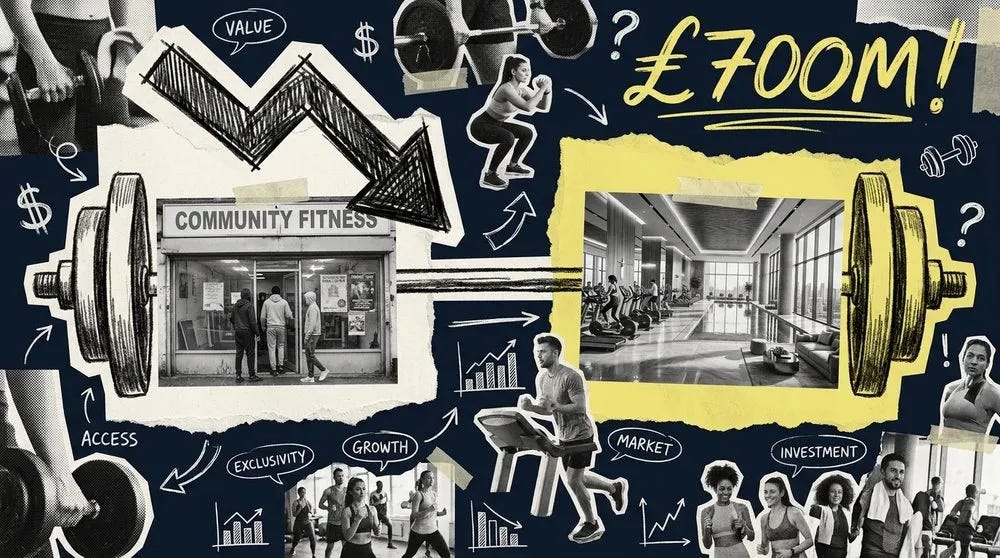
Planet Fitness cut its 2026 outlook in the same week Permira lined up a roughly £700 million bid for Third Space, a 13-club London operator whose members pay around £250 a month. Read together, they describe a market splitting at both ends: growth has stalled at the bottom while spending power concentrates at the top. When you can’t grow by adding bodies, ARPM becomes the whole game, and the sequence matters more than the number. Add value before you touch the price. If you want the pricing side of this in full, our deep dive The Take on why your pricing is older than your software lays out the five key rules.
Anytime Fitness Is Giving Away Apple Fitness+. Apple Might Need It More Than the Members Do.
From August 4, every Anytime Fitness member in the UK and Ireland gets Apple Fitness+ free for the life of their membership, a £9.99-a-month product handed over at no charge. Apple has fought stagnant growth and high churn on Fitness+ since its 2020 launch, so the partnership solves Apple’s distribution problem at least as neatly as it solves Anytime’s retention problem. The operator lesson is about dependence: a perk you build retention on can be repriced, changed or sunset by somebody else.
Most operators assume the recovery score is about to become the new “I forgot my shoes.” The research points the other way: in recreational runners, a decline in readiness-to-train combined with elevated nocturnal heart rate flagged genuinely overreached athletes with 85% or better predictive accuracy. The members most fixated on their scores are frequently the ones overtraining, and the device tells them they’re tired without telling them what to do instead. Whoever turns that number into a specific session owns the floor.
Discounts Don’t Keep Gym Members. Habits Do. South Korea Just Proved It.
South Korea halved the payout on Teunteun Money, its national program paying citizens to exercise, expecting demand to cool. Participation went from roughly 317,000 to nearly 700,000 people year over year, and average exercise time per participant rose 19%, about two extra hours each. The reward got smaller and the behaviour got bigger, which is the cleanest available argument against burning margin on retention discounts. An incentive is very good at getting someone to start and very bad at keeping them.
A $599 Genome Test Is About to Change What Members Expect From Your Gym.
On August 3, Human Longevity launched clinical-grade whole-genome sequencing at $599, all 6.4 billion base pairs at 30x depth, AI-interpreted, no clinic visit required. That puts the full genome in the same price band as a decent wearable. In June we argued the longevity clinic was coming for your most valuable members, and at the time it read as a premium-tier problem. At this price it becomes a mainstream expectation, and the window to enter the category on your own terms is closing.
AI Is Making Personal Training Cheap. Now Gyms Have to Redefine Its Value.
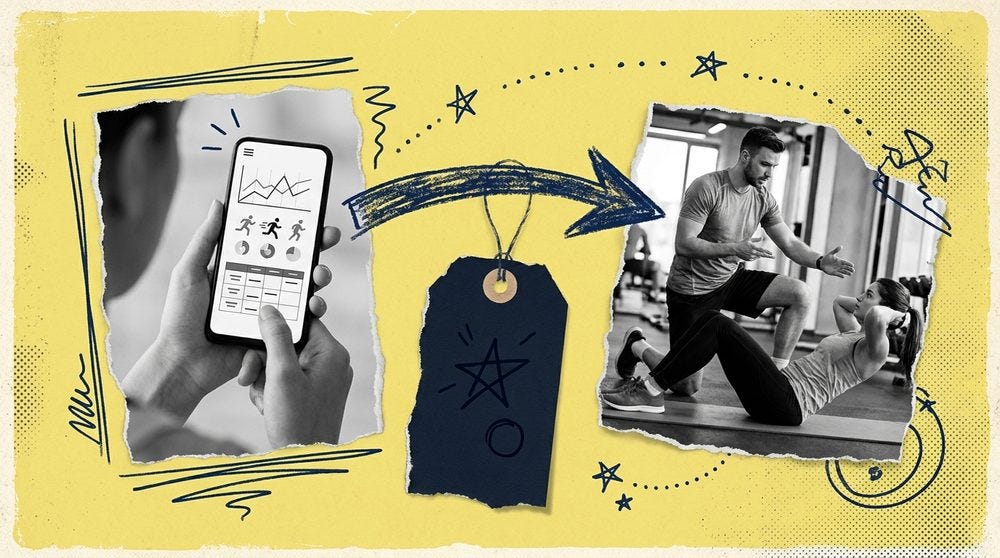
A human trainer runs $120 to $350 a month. An AI coaching app charges $10 to $30, and investors are funding the gap hard. The replacement framing misses what’s actually happening: cheap coaching creates a new bottom rung of self-guided exercisers who eventually plateau and want the two things software can’t hand them, real options and a room full of other people. What it does expose is how much personal training was never differentiated to begin with. A trainer who counts reps and emails a spreadsheet is now competing with a $15 app that does both instantly.
Women Are Driving the Rucking Boom. It’s the Strength On-Ramp Operators Can Capitalize On.
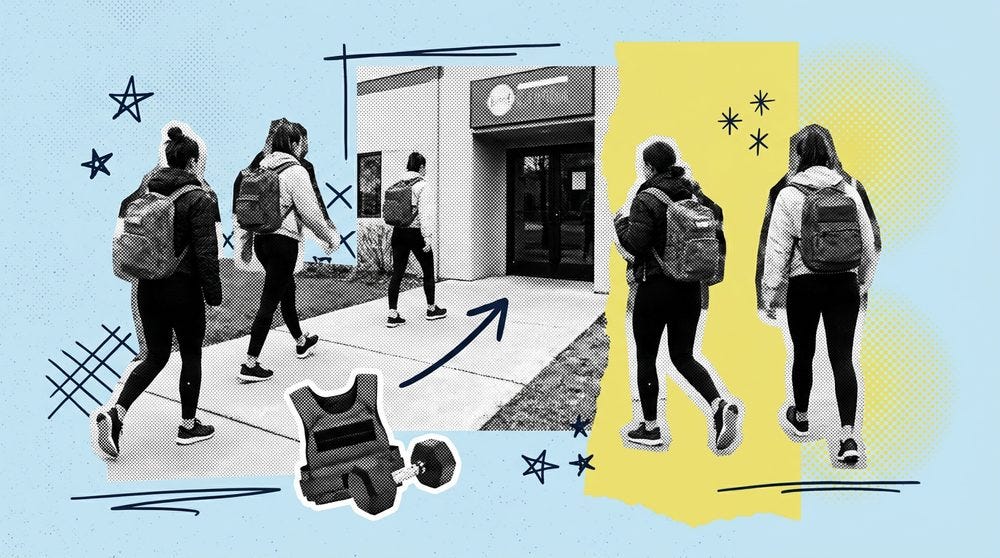
GORUCK reports sales up around 40% and says women are now its fastest-growing customers. Weighted-vest sales are up roughly 50% year over year to about $27 million. Rucking works because it removes the two things that keep women out of the weight room, intimidation and the fear of doing it wrong, and it’s close to impossible to mess up. Run clubs already showed operators how to turn a free outdoor habit into an acquisition engine. This is the same opening pointed at strength, and most gyms are watching it happen on the sidewalk.
Read This Week
Five posts we read this week all from studio owners and one wellness investor.
Your Instructor Pay Structure Is Capping Your Margin at 6% — Courtney Clapper, The Business of Pilates

The best studio math we read all week, and it sits right on top of our revenue-per-member story. Courtney shows how wages eat 40 to 45% of what a studio takes in, how rent pushes that to about 70% before anything else, and how each of the four common pay models quietly picks your margin for you. If you own a studio and you’ve never run these numbers, run them. Her line on flat-rate pay: it “protects the instructor completely and protects your margin not at all.”
My Most Unpopular Wellness Prediction — Rach Hirsch, The 2% Club

This one is about Big Food, and every gym owner should read it anyway. Small brands under $100 million drove 35% of category growth in 2025, up from 15% two years before, while the big guys managed under 1%. Shoppers went to private label when they wanted cheap and to small brands when they wanted good, and everything in the middle got stranded. That’s the Planet Fitness problem with different products on the shelf.
Why I Started a Perimenopause Protocol — Rach Hirsch, The 2% Club
Over a billion women are heading into a life stage that lasts a decade, with almost no brands they trust and doctors who were barely taught it. Read it right after our rucking piece. Same customer, walking into strength through the side door, and nobody is ready for her. Any gym or studio owner asking where the next wave of members comes from should start here. Hirsch on women “told they’re fine, or anxious, or just stressed, while their hormones quietly redecorate the entire house.”
If You Want to Open a Dance Studio — Andrea, Elevéte with Andrea
The opposite of every “open your own studio” post out there, written by someone who actually runs one. It takes years to make money, you never really switch off, and running the business matters more than being good at the craft. Send it to anyone about to sign a lease. Her line: “Owning a dance studio has very little to do with dancing.”
Growth Doesn’t Always Announce Itself — Andrea, Elevéte with Andrea
The quiet one here, and still worth two minutes. Andrea won a Growth Award during a stretch where she felt underwater, and makes the case that most real progress shows up with no number attached to it. One for any studio owner who only counts the month they just had. Her version: sometimes growth is bigger numbers, and sometimes it’s becoming the person who can handle what would have buried you a year ago.
Who to Follow
Courtney Clapper — The Business of Pilates
Clapper writes the P&L side of Pilates, which almost nobody does. The category has spent three years generating headlines about booking growth and reformer waitlists while the studios underneath run on a 6 to 7% margin, and she is one of the only people publishing the mechanics of why. This week’s post takes apart four instructor pay models and shows exactly which line item is eating the business, with real dollar ranges rather than the usual “raise your prices” advice. Follow her if you want the arithmetic that decides whether a full class schedule is actually worth running.
That’s the week. If someone forwarded you this, subscribe free at newsletter.therunrate.co. And if you want The Take (our twice-monthly opinion issue) plus the full Growth Playbooks library, the paid tier is $8/mo.
Add value before you touch the price is the half of the sentence that gets skipped. Most added value turns out to be another feature nobody asked for, when what actually lifts spend per member is being known. Nearly four decades in PR and the pattern held in every category: the businesses getting more from the same customers were the ones who could tell you what stage of life she was in. Cheaper than a new perk, and much harder to copy.
So glad my Substack resonated with you!!